

Differences Between Power, Predictive, and Preview Dialers: A Complete Guide
Power, predictive, and preview dialers serve different outbound calling needs. Learn how each dialer works, compare speed, call volume, agent control, and use cases, and choose the right option for your call center software and sales campaigns.
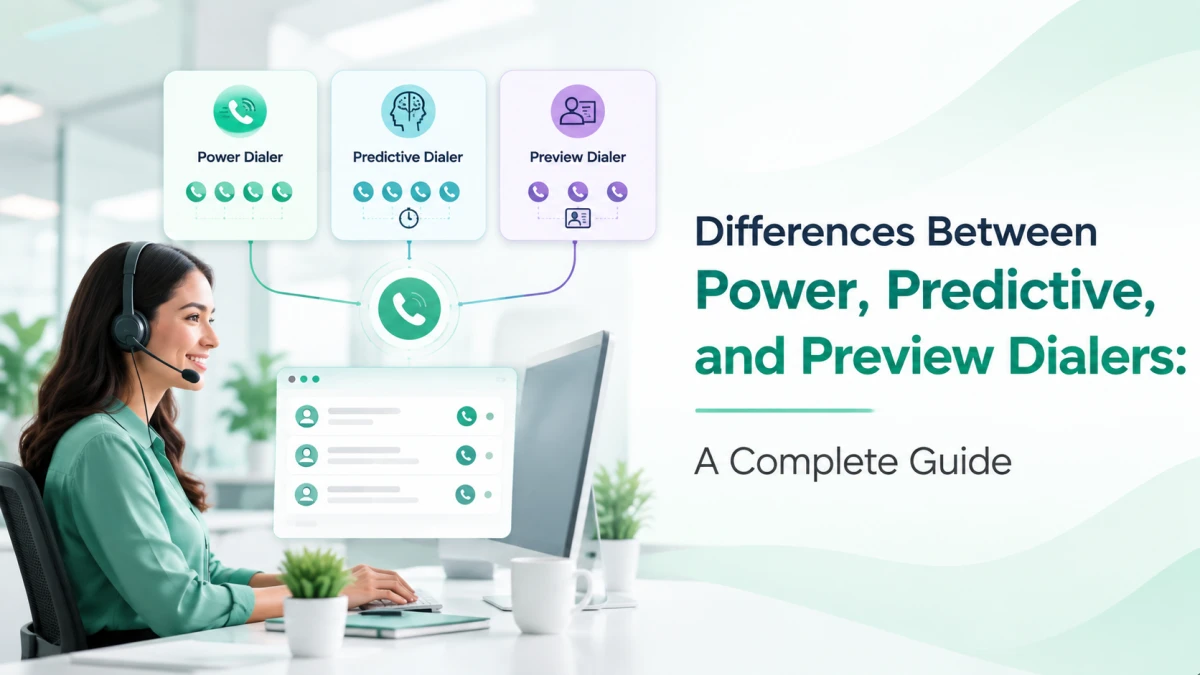
Every call center runs on speed and accuracy. Agents need to reach real people fast, without wasting time on busy signals, voicemail, or numbers that never pick up. That's where dialers come in. A good dialer sits at the heart of any call center software, deciding how and when calls go out to customers.
But not all dialers work the same way. Some call numbers automatically and connect agents only when someone answers. Others let agents see who they're about to call before the phone even rings. Picking the wrong one can mean lost sales, annoyed customers, or agents sitting idle for long stretches. This guide breaks down the three main types power, predictive, and preview dialers so you can figure out which one fits your team.
What a Dialer Actually Does
A dialer is a tool built into your contact center solution that automates the process of placing outbound calls. Instead of an agent manually punching in numbers one by one, the system handles that work. This saves time and cuts down on errors. But the real difference between dialer types comes down to how they decide when to place the next call and how they connect that call to an agent.
Think of it like a factory line. Some lines move at a steady pace, one item after another, tied closely to how fast a worker can handle each piece. Others speed up based on predictions about how quickly workers will finish. And some lines pause and let the worker check each item before it even starts moving. That's basically the difference between preview, power, and predictive dialing.
Power Dialers: Steady and Simple
A power dialer calls one number at a time, right after an agent finishes their previous call. As soon as an agent hangs up, the system dials the next contact on the list. There's no guesswork involved. The dialer just moves down the list at a pace that matches agent availability.
This method works well for teams that want a steady flow without much waiting around. Since only one call goes out per available agent, there's less risk of an agent picking up a call with no live person on the other end. Power dialer solutions cut out a lot of the dead air you get from manual dialing, but they still give agents a moment to breathe between calls, since the system won't fire off calls faster than agents can handle them.
Sales teams often use power dialers because they need a decent volume of calls each day without sacrificing lead quality. If your team spends a lot of time on qualified leads that need a real conversation, a power dialer usually strikes the right balance. It keeps the pace brisk but doesn't overwhelm agents with back-to-back connections before they've even logged notes from the last call.
Predictive Dialers: Built for Volume
A predictive dialer takes things further. Instead of waiting for one agent to finish before dialing the next number, it calls several numbers at once based on math. The system looks at things like average call length, how many agents are free, and how often calls actually connect. Then it dials ahead of time, guessing how many calls will need an agent by the time they connect.
This is where the predictive dialer earns its name. It predicts the right moment to place calls so that, in theory, an agent is ready right when a customer picks up. The upside is huge call volume. Predictive dialers are built for outbound teams that need to reach hundreds or thousands of contacts a day, like debt collection agencies, political campaigns, or large-scale telemarketing operations.
The tradeoff is accuracy. Since the system is guessing, it sometimes dials too many numbers at once. When more people answer than there are free agents, some calls get dropped or the customer hears silence for a second before anyone speaks. This is sometimes called a nuisance call, and too many of them can violate call center regulations in some regions. So while predictive dialers are the fastest option, they need careful tuning to avoid annoying customers or breaking compliance rules.
Preview Dialers: Slow and Deliberate
A preview dialer flips the whole approach. Instead of the system deciding when to call, the agent sees the contact's information first name, account history, notes from past calls before deciding whether to place the call at all. Once the agent is ready, they hit a button and the system dials that one number.
This method trades speed for quality. Since agents review each contact ahead of time, they walk into every call prepared. This matters a lot for complex sales, high-value accounts, or situations where a canned pitch won't cut it. A preview dialer software is common in industries like insurance, financial services, and business-to-business sales, where the agent needs context before they even say hello.
The downside is obvious: fewer calls per hour. Since agents spend time reviewing details before every call, preview dialing produces lower volume than power or predictive dialing. But for teams where each call carries weight, that tradeoff often pays off in better conversion rates and stronger customer relationships.
Comparing the Three Side by Side
Looking at all three together makes the differences easier to grasp.
Power dialers move at a pace set by agent activity. One call follows another, right after the last one ends. This keeps volume solid without much risk of dropped calls, since only one number gets dialed per free agent at a time.
Predictive dialers move faster than power dialers by calling multiple numbers before agents are even free. The system uses data to guess timing, aiming to keep agents on back-to-back calls with almost no gaps. This delivers the highest call volume of the three, but it also carries the highest risk of dropped or abandoned calls.
Preview dialers move the slowest because agents control the pace. Every call starts only after the agent has looked over the contact's details. This produces the lowest volume but usually the highest quality conversations, since agents aren't caught off guard.
How to Pick the Right One for Your Team
The right choice depends on what your team actually needs to accomplish. If your goal is raw call volume reaching as many people as possible in a short time a predictive dialer probably fits best. This works well for large campaigns where each call is short and doesn't need much personal context.
If you want a middle ground between speed and control, a power dialer usually does the job. It keeps agents busy without flooding them with more calls than they can manage, and it avoids most of the dropped-call issues that come with predictive dialing.
If your calls need real preparation, like reviewing an account history or checking notes from a previous conversation, a preview dialer is worth the slower pace. Agents show up ready, which often leads to better outcomes even though fewer calls happen each hour.
Many modern call center software platforms let you switch between dialer modes depending on the campaign. A single contact center solution might use predictive dialing for a large outbound sales push, then switch to preview dialing for a smaller list of high-value leads. This flexibility means you don't have to commit to just one method across your whole operation.
A Few Other Things to Consider
Beyond picking a dialer type, a few other factors shape how well your outbound calling actually performs. Call list quality matters a lot. Even the best dialer can't fix a list full of wrong numbers or outdated contacts. Cleaning your data regularly keeps whichever dialer you choose running efficiently.
Compliance rules also play a big role, especially with predictive dialing. Many regions cap how many calls can go unanswered or how long a customer can wait in silence before an agent picks up. Make sure whatever system you use tracks these limits and adjusts automatically.
Agent training matters too. Even with power or predictive dialers doing the heavy lifting, agents still need to know how to handle a fast pace, log notes quickly, and stay sharp through repeated calls. Pairing the right dialer with well-trained agents makes a bigger difference than the technology alone.
Wrapping Up
Power, predictive, and preview dialers each solve a different problem. Power dialers offer steady, reliable pacing. Predictive dialers push for maximum volume, accepting some risk of dropped calls in exchange for speed. Preview dialers slow things down so agents can prepare, trading volume for quality.
There's no single best option here. The right dialer depends on your goals, your team size, and the kind of conversations your agents need to have. Many businesses end up using more than one type, switching based on the campaign at hand. Whatever you choose, matching the dialer to the job at hand makes outbound calling smoother for both your agents and the people on the other end of the line.
What's Your Reaction?
 Like
0
Like
0
 Dislike
0
Dislike
0
 Love
0
Love
0
 Funny
0
Funny
0
 Wow
0
Wow
0
 Sad
0
Sad
0
 Angry
0
Angry
0













Comments (0)