

Travel Gear Hacks That Actually Work: Packing Smarter, Not Harder
This guest post covers 9 practical travel gear hacks to pack smarter and lighter. Key tips include: knowing your luggage weight limits, using compression bags and packing cubes, wearing bulky shoes during travel, downsizing toiletries with solid alternatives, organizing cables and small items in ziplock bags, considering backpacks for short trips, mixing and matching clothes in neutral colors, and backing up important documents digitally. The theme emphasizes intentional packing that cuts luggage volume by 25-30% while reducing travel stress. Written in conversational, relatable tone for Blog Varient's Travel section with SEO optimization for packing-related keywords.
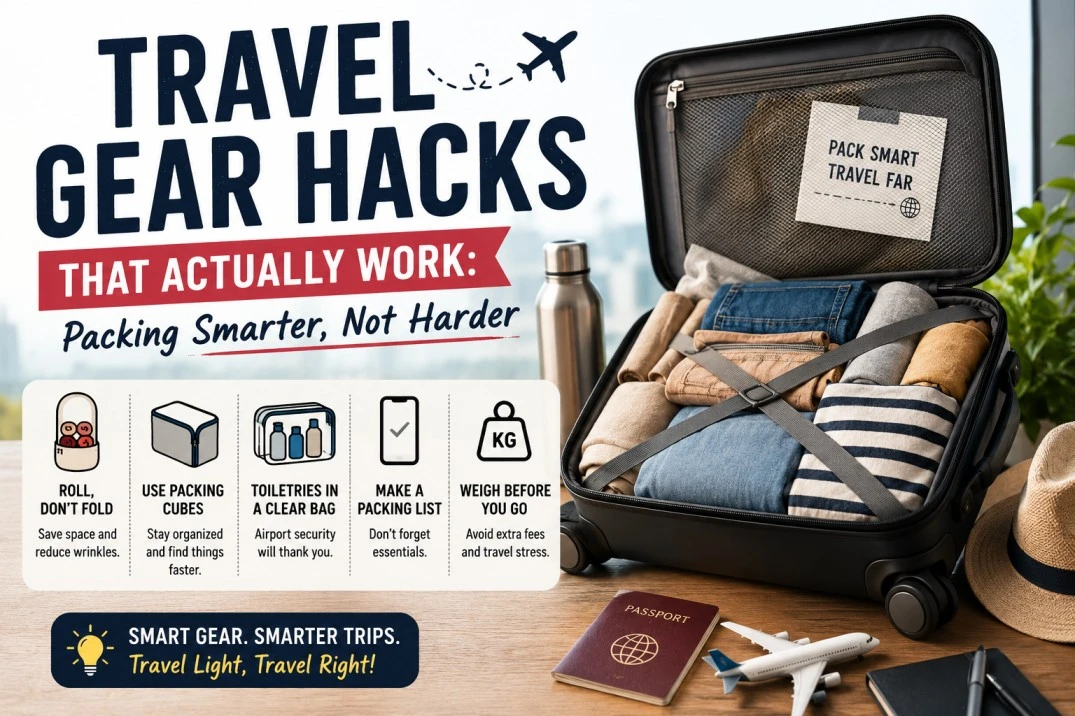
We've all been there - standing in front of an open suitcase at 6 AM, wondering how you're going to fit everything you need for a two-week trip without checking a second bag. And if you're flying budget airlines? The stress doubles.
Over the years, travelers have figured out some genuinely useful hacks that go way beyond the typical "roll your clothes" advice. Some are obvious once you know them. Others require a bit of creative thinking. But together, they can transform how you pack and travel.
The Luggage Weight Game
Here's the truth nobody wants to admit: most of us overpack by about 30%. We throw in "just in case" items, duplicate toiletries, and half-read books we'll never finish on the plane.
The first hack isn't about a product - it's about psychology. Weigh your empty luggage or backpack. Know the limit your airline charges overweight fees at. Then pack to about 80% of that limit, not 100%. This leaves room for souvenirs and things you'll pick up, and it makes handling your bag infinitely easier through airports and train stations.
For hard trolley luggage, consider switching to a quality soft-sided bag for shorter trips. They're lighter, compress easier, and fit in overhead compartments that reject rigid cases. The trade-off is less impact protection, but for clothes and soft items, you rarely need it.
Compression: The Obvious Hack That Works
Compression bags have been around forever, but people still don't use them. A vacuum seal bag can cut down your clothing volume by 40-50%. Yes, you need to pack them carefully to avoid wrinkling. Yes, they're slightly annoying to use. But they actually work.
The trick is rolling clothes first, then placing them in the bag. Don't just stuff things randomly. And if you're using a hand-pump version instead of a vacuum, accept that you won't get the same compression - but you also won't need an outlet or vacuum cleaner.
Packing cubes serve a similar function but without the compression. They keep different types of clothing separated, making it easier to find things without unpacking your entire bag. Underwear in one cube, socks in another, tops in a third. Takes 30 seconds to organize, saves 10 minutes of digging later.
The Shoe Problem (And Solution)
Shoes take up absurd amounts of space. A pair of hiking boots or dress shoes can hog half your packing volume.
The hack: wear your bulkiest shoes during travel. I know it sounds obvious, but most people don't do it. If you're packing boots, wear them on the flight or train ride. Same with your gym shoes if you're bringing them. This alone can free up a solid amount of luggage space.
For shoes you're not wearing in transit, stuff them with socks, underwear, or small items. Don't waste that interior volume. And if you have multiple pairs, consider shoes that can do double duty - neutral sneakers that work for walking, casual meals, and light hiking; one nicer pair if you need it.
Toiletries: Where People Lose Space
Travel-size bottles are your friend, but most people don't downsize enough. You don't need a full-size shampoo bottle for a week away. A 50ml container is genuinely plenty.
Better yet: solid shampoo bars, solid deodorant, solid soap. They take up a fraction of the space, weigh nothing, and last surprisingly long. TSA approves them (they're not liquids), and they work just as well as liquid versions. A solid shampoo bar might last two weeks of daily use, compared to a bottle you'd finish in a few days.
For medications, toothpaste, and actual liquids, follow the 3-1-1 rule: 3.4 oz containers, 1 quart-sized bag, 1 per person. Consolidate where you can. Dental floss? Use a toothpick instead for the trip. Bulky skincare routine? Narrow it down to essentials.
Ziplock Bags: The Underrated MVP
This sounds ridiculous until you travel with them. Small ziplock bags cost almost nothing and solve multiple problems.
Use them for wet items (sweaty workout clothes, damp hair ties, toiletries that might leak). Use them for snacks and small items so they don't scatter in your luggage. Use them for electronics and chargers to keep cables organized. Use them for broken items like torn socks or damaged clothes to separate them from clean things.
They also compress slightly when zipped, which helps with volume. And if you're traveling to multiple countries or staying in hostels, a few gallon-sized bags can be invaluable.
Electronics: Cable Management
Cables are chaos. Phone charger, laptop charger, camera cable, power bank cable - they tangle, take up space, and you can never find the right one when you need it.
Get a small cable organizer (sometimes called a cable pouch or tech organizer). Spend $10-15 on a decent one. Wrap your cables neatly inside, label them if you're feeling fancy, and suddenly you have one compact item instead of a cable explosion in the bottom of your bag.
Or, more minimalist option: use old sunglasses cases or small cardboard tubes to wrap individual cables. Cardboard from toilet paper rolls actually works. Secure with a rubber band. It's not glamorous, but it's free and effective.
The Backpack Advantage for Short Trips
If you're traveling for 3-5 days and don't need to look business-formal, a good backpack beats a carry-on wheelie every time. It's lighter, more maneuverable through crowded airports, doesn't need rolling, and you can actually carry it comfortably through cities.
A 40-45 liter travel backpack is the sweet spot for most travelers. It fits airline carry-on requirements (check dimensions with your carrier), distributes weight better than rolling luggage, and is genuinely easier to live out of in a hostel or small hotel room.
The catch: you need to pack more intentionally. A backpack doesn't forgive poor packing like a rigid suitcase does. But that intentionality often leads to lighter, smarter packing overall.
Layering Clothes, Not Bulk
Instead of packing five different outfits, pack basic layers that mix and match. Three pairs of pants/bottoms in neutral colors. Five tops that work together. One light layer (cardigan or thin jacket) for temperature changes. One heavy layer if you're going somewhere cold.
This requires slightly more planning, but five neutral pieces that work together take less space than seven pieces that don't. You can create way more outfit combinations from fewer items.
Stick to neutral colors (blacks, grays, blues, beige) with maybe one accent color. Everything coordinates. You don't need that bright yellow shirt because you already have five other tops to rotate.
The Documentation Hack
Make digital copies of your passport, travel insurance documents, and any important booking confirmations. Store them in your email, cloud storage (Google Drive, OneDrive), and your phone. If your physical documents get lost, you have backups accessible anywhere with internet.
Take a photo of your luggage tags and baggage claim tickets. Store them in your phone. If your bag gets lost, you have proof of what you packed and the airline claim information immediately available.
It takes five minutes, weighs nothing, and can save incredible amounts of stress.
Final Thought
Travel gear hacks aren't about buying fancy products or following Instagram packing videos. They're about working with what you have and thinking practically about what you actually need versus what you think you might need.
Most travelers could cut their luggage volume by 25-30% just by being intentional. And honestly? Traveling lighter is less stressful. Less to worry about, less to manage, less to lift, less to search through when you can't find your phone charger at 11 PM.
The best travel hack is the one you'll actually use. Start with one or two that make sense for your next trip. Add another later. Eventually, you'll have your own system that works for how you travel.
And who knows - you might actually enjoy packing for once.
What's Your Reaction?
 Like
0
Like
0
 Dislike
0
Dislike
0
 Love
0
Love
0
 Funny
0
Funny
0
 Wow
0
Wow
0
 Sad
0
Sad
0
 Angry
0
Angry
0











.png)

Comments (0)