

What Is Concrete Resurfacing and How Does It Work
What is concrete resurfacing? Learn how the process works, which surfaces qualify, and when repair or replacement makes more sense for your property.
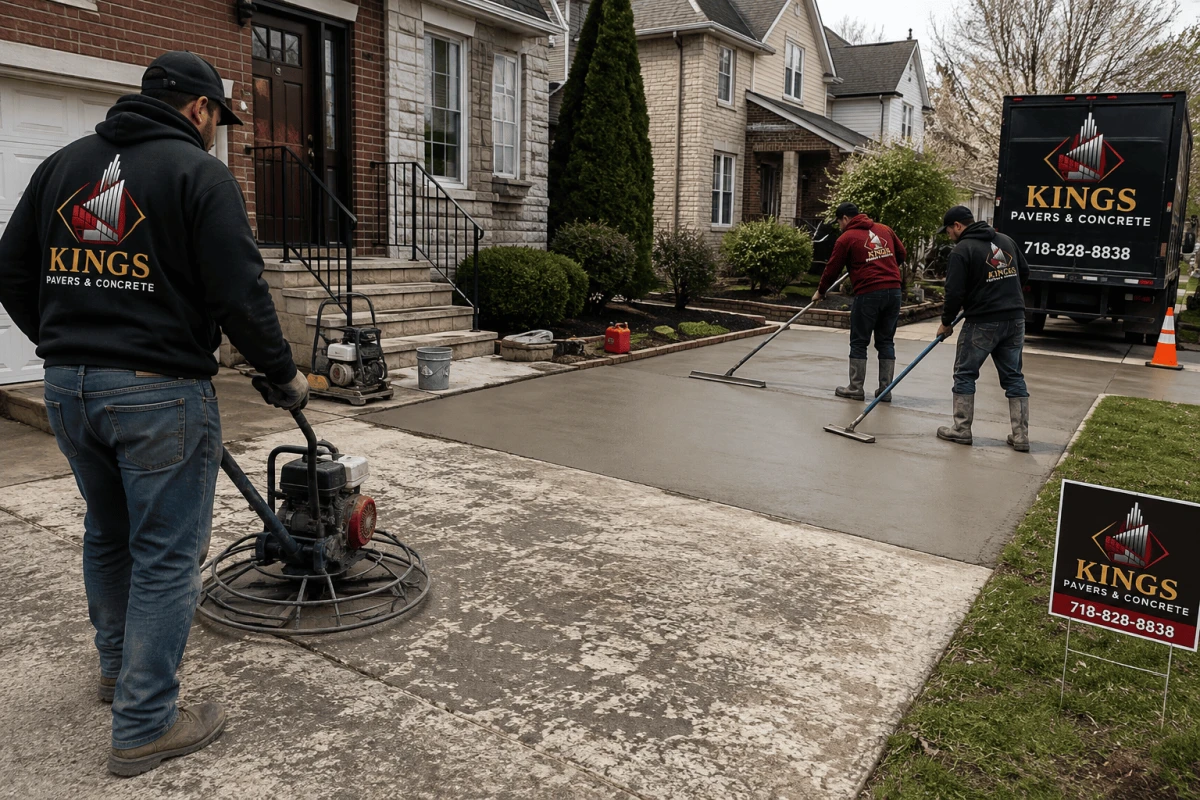
Concrete does not stay looking new forever. Sun exposure, moisture, road salt, and years of foot or vehicle traffic gradually wear down driveways, patios, and walkways. For property owners facing a tired-looking slab, resurfacing is often mentioned as a faster and less disruptive alternative to tearing everything out. But what is concrete resurfacing, exactly, and when does it actually make sense?
In short, concrete resurfacing involves cleaning and preparing an existing slab, then applying a new bonded overlay material over it to restore appearance and surface condition. It is a surface-level solution. It does not automatically correct structural movement, unstable soil, major settlement, or drainage problems underneath the slab, which is an important distinction before deciding whether it fits a particular project.
How Concrete Resurfacing Works
Resurfacing is not simply pouring a thin layer over old concrete and hoping it sticks. A proper job follows a sequence of steps, and skipping any of them tends to shorten how well the new surface performs.
Inspecting the Existing Concrete
Before any material goes down, the existing slab needs a real evaluation. A contractor should look for cracking, spalling, scaling, uneven movement, drainage issues, and any prior coatings or patch repairs. This step matters because the underlying cause of the damage determines whether resurfacing is even appropriate. A slab that is cosmetically worn is a very different situation from one that has shifted or settled, and treating both the same way leads to disappointing results.
Cleaning and Surface Preparation
Bonding is the entire point of resurfacing, and bonding fails on a dirty or contaminated surface. Preparation typically includes removing dirt, oil, and loose or deteriorated material, along with mechanically preparing the surface so the new layer has something solid to grip. Resurfacing material should never be applied directly over an unprepared slab. If a surface is not properly cleaned and profiled first, the new layer is far more likely to peel, delaminate, or fail early.
Repairing Appropriate Defects
Certain cracks or damaged sections often need attention before resurfacing begins. Patching a crack, however, does not necessarily eliminate whatever caused it in the first place. If a crack keeps reappearing after repair, that is usually a signal that something beneath the surface, rather than the surface itself, needs to be addressed.
Applying the Resurfacing Material
Once the slab is clean, sound, and repaired where needed, a resurfacing or overlay material is applied across the prepared area. The exact application method and thickness vary depending on the product and the condition of the existing concrete, so there is no single universal specification that applies to every driveway or patio.
Finishing and Curing
After application, the surface can be finished with a texture appropriate to its use, including slip-resistant options for walkways or pool decks. Weather conditions during installation affect how the material sets, and the new surface needs time to cure and be protected from traffic while it does. Rushing this stage is one of the more common reasons a resurfaced area underperforms.
What Concrete Surfaces Can Be Resurfaced?
Resurfacing is commonly used on driveways, patios, walkways, sidewalks, pool decks, garage floors, and other flatwork. Whether a specific slab qualifies depends less on what it is and more on the condition it is currently in. A structurally sound driveway with surface wear is generally a strong candidate. A slab with deeper structural problems is a different conversation entirely.
When Concrete Resurfacing May Make Sense
Resurfacing tends to be a reasonable option when the existing concrete is structurally stable but showing its age. Worn surfaces, minor scaling, cosmetic discoloration, and light superficial damage are typical scenarios. It's worth noting that appearance alone is not enough to confirm suitability. A slab can look rough on the surface while still being structurally fine, or it can look acceptable while hiding a problem underneath, which is why the inspection step matters as much as it does.
When Resurfacing May Not Be Enough
This is where property owners should slow down before committing to a resurfacing project. Significant settlement, sinking sections, active structural movement, severe deterioration, extensive cracking, unstable underlying soil, and serious drainage problems are not issues that a new surface layer fixes. Covering a slab that is still moving or settling with a fresh overlay simply hides the problem temporarily. The underlying cause continues, and the new surface is likely to crack or fail again, sometimes faster than the original concrete did. If there is any doubt about slab stability, that needs to be assessed and resolved before resurfacing is considered.
Concrete Resurfacing vs Concrete Repair
These two terms get used interchangeably, but they describe different scopes of work. Repair generally targets specific defects, such as a single crack, a small spalled area, or a localized patch of damaged concrete. Resurfacing renews a broader surface area using a bonded overlay layer. Many projects actually involve both: repairing the problem areas first, then resurfacing the full slab so the finished surface looks consistent. Property owners who are unsure whether their situation calls for repair, resurfacing, or a closer inspection can find it useful to have a full assessment from a company such as Kings Pavers & Concrete before choosing a direction, since the right approach depends heavily on what is actually happening beneath the surface.
Concrete Resurfacing vs Replacement
Resurfacing and full replacement solve different problems, and neither one is automatically the better or cheaper choice. It depends on the condition of the existing slab and what caused the damage in the first place.
|
Factor |
Resurfacing |
Replacement |
|
Existing slab |
Generally retained |
Removed and rebuilt |
|
Best suited for |
Structurally stable concrete with surface deterioration |
Severely damaged or unsuitable concrete |
|
Site disruption |
Usually less extensive |
Generally more extensive |
|
Underlying problems |
Does not automatically correct them |
Allows underlying conditions to be addressed during reconstruction |
|
Appearance |
Can refresh the surface |
Creates an entirely new slab |
When comparing resurfacing versus replacement, the deciding factor usually comes down to whether the existing slab itself is sound. A stable slab with cosmetic wear is a reasonable resurfacing candidate. A slab with structural, settlement, or drainage problems generally needs those issues addressed, which often points toward replacement or more extensive repair work.
Can Cracked Concrete Be Resurfaced?
This is one of the most common questions homeowners ask, and the honest answer is that it depends. It depends on the type of crack, what caused it, whether the crack is still active or has stabilized, and the condition of the surrounding concrete. A hairline crack in an otherwise stable slab is a very different situation than a wide crack tied to ongoing settlement. Resurfacing should never be used as a way to visually hide active movement, because the crack will likely telegraph through the new layer or reopen it entirely. There is no universal crack-width rule that determines suitability on its own; it comes down to what is causing the crack.
Can Uneven or Sunken Concrete Be Resurfaced?
Resurfacing is not generally a substitute for correcting real settlement or support problems beneath a slab. If a section of concrete is sinking, shifting, or creating a noticeable elevation difference from an adjacent section, that points to an underlying support or soil issue that needs to be evaluated first. Applying a cosmetic layer over an unstable area does not resolve the trip hazard or the cause behind it, and in some cases it can make the problem harder to diagnose later.
Decorative Concrete Resurfacing
Beyond basic restoration, resurfacing also opens up appearance options that aren't practical with plain concrete alone. Smooth or textured finishes, decorative overlays, color treatments, stamped patterns, and slip-resistant textures for pool decks or walkways are all common choices. These options are worth discussing during the planning stage, since the intended use of the space, whether it's a driveway that sees regular vehicle traffic or a patio used for entertaining, affects which finish makes the most sense.
How Long Does Concrete Resurfacing Last?
There is no single number that applies to every project. How long a resurfaced area holds up depends on the condition of the original slab, how thoroughly it was prepared, the specific product or system used, installation quality, bonding, drainage, the amount of traffic it sees, and ongoing maintenance. A resurfacing job done over a poorly prepared or unstable slab will not perform as well as one done over sound concrete with proper preparation, regardless of the product used. Anyone quoting a guaranteed lifespan without inspecting the actual slab first is skipping a step that genuinely matters.
New York Climate Considerations
Exterior concrete in New York deals with a demanding freeze-thaw cycle each year, along with rain, snow, and the deicing salts many properties rely on through winter. Moisture that gets into concrete and then freezes can put stress on both the original slab and any resurfacing layer applied over it, so drainage and material selection matter more here than they might in a milder climate. Driveways, walkways, and patios exposed to these seasonal swings benefit from resurfacing systems chosen with that exposure in mind, along with surface preparation that accounts for how the existing slab has weathered previous winters.
Questions to Ask Before Resurfacing Concrete
Before moving forward with a resurfacing project, it helps to have clear answers to a few practical questions:
-
Why has the existing concrete deteriorated?
-
Is the slab structurally stable?
-
Are any cracks still active or moving?
-
Is there evidence of settlement?
-
Are there drainage problems contributing to the damage?
-
How will the existing surface be cleaned and prepared?
-
Do any cracks or damaged areas need repair first?
-
What resurfacing system fits this specific situation?
-
What finish suits the way the space will be used?
-
How will the new surface be cured and protected?
Getting straight answers to these questions before work begins is the best way to avoid paying for a resurfacing job that fails within a year or two. A stable, well-prepared slab with the right overlay system can look considerably better without a full replacement. But that outcome depends entirely on an honest assessment of what is actually happening with the existing concrete before any new material goes down.
FAQs
Is concrete resurfacing the same as replacing concrete? No. Resurfacing keeps the existing slab in place and applies a new bonded layer over it, while replacement removes the old concrete entirely and pours a new slab.
Can badly cracked concrete be resurfaced? It depends on what is causing the cracks. Stable, cosmetic cracking may be repaired and resurfaced, but cracks tied to active movement or settlement usually need that underlying issue addressed first.
Can a concrete driveway be resurfaced? Yes, driveways are one of the more common applications, provided the slab underneath is structurally stable and properly prepared before the overlay is applied.
Can resurfacing fix sinking or uneven concrete? Generally, no. Resurfacing addresses the surface, not settlement or support problems, so a sinking or uneven slab typically needs those underlying issues evaluated first.
What determines how long resurfaced concrete lasts? Performance depends on the condition of the original slab, how well it was prepared, the product used, installation quality, drainage, traffic levels, and ongoing maintenance.
What's Your Reaction?
 Like
0
Like
0
 Dislike
0
Dislike
0
 Love
0
Love
0
 Funny
0
Funny
0
 Wow
0
Wow
0
 Sad
0
Sad
0
 Angry
0
Angry
0












Comments (0)