

Why Projection Mapping Works Better Than Static Displays for Complex Brand Stories
This blog argues that complex brand stories don't fit on static displays like banners or posters, since those formats can only show one message at a time with no sequence or emotional build. Projection mapping fixes this by letting a story unfold in stages—context, depth, then payoff—rather than flattening everything onto one surface. It walks through what a real large-scale build requires behind the scenes (surface surveys, locked technical specs, a full dress rehearsal, proper documentation), then points to four IIC case studies (Protean, Oral-B, Volkswagen, Maruti Suzuki) as proof that bigger stories need more room than a banner can offer. It closes with practical tips for brands planning installations, a note on retail sales lift from experiential activations, and a CTA inviting brands with "too much story for a banner" to reach out to IIC Lab.
Some brands have a simple story. A new flavour, a new colourway, a single clear benefit - a banner and a good photograph can carry that just fine. But some brands don't have a simple story. They have decades of history, several business lines, a genuinely complicated operational footprint, or a technical product that takes real explanation to land. For those brands, a static display isn't a budget-friendly option. It's a format that quietly fails the story before it even gets told.
That's the gap projection mapping technology was built to close - not by making things louder, but by giving a complex story room to unfold in sequence, with pacing, instead of getting flattened onto a single flat surface.
The Static Display Problem
A poster, a banner, a screen running one loop - all of these share the same structural limit: they can only hold one message at a time, in one register, with no sense of build or payoff.
-
No sequence. A static display shows everything at once, so there's no way to lead a viewer from "here's the context" to "here's why it matters."
-
No emotional arc. The best brand stories build to something. A flat surface has no mechanism for pacing that build.
-
One glance, one impression. Most people spend a few seconds with a static display before moving on - nowhere near enough time to absorb something genuinely complex.
-
No layering. A history, a product range, and a mission statement all competing for the same static real estate usually means none of them land clearly.
None of this is solved by making the banner bigger or the screen brighter. It's solved by changing the format entirely.
What Changes When the Story Can Move
Immersive projection mapping doesn't just add motion for its own sake - it adds sequence, layering, and pacing, the three things a complex story actually needs to land.
-
Content can build in acts, the way a good keynote does - context, then depth, then payoff - instead of dumping everything at once.
-
Multiple layers of a story can occupy the same physical space at different moments, without ever competing for attention simultaneously.
-
The pacing is designed, not accidental - a brand can control exactly how long a viewer spends on each idea before the next one arrives.
What Actually Happens Behind a Large-Scale Installation
None of the above happens by accident, and it's worth being honest about what a genuinely large-format projection build actually requires behind the scenes - because this is where most ambitious brand-story activations either come together cleanly or fall apart under pressure.
IIC Lab's own breakdown of this process, our production pipeline for high-fidelity CGI and projection experiences, lays out the discipline involved:
-
Surface surveys come first, always. Accurate measurements, photography, and material samples - often via calibrated photogrammetry for complex geometries - drive every downstream creative decision.
-
Technical specs get locked early. Projector models, lumen output, throw ratios, and playback hardware are documented before content production starts, not decided on-site.
-
Content is built for real-world conditions, not a rendering environment - colour workflows are calibrated so what's approved on a monitor actually matches what a projector produces on the physical surface.
-
At least one full dress rehearsal happens on the actual surface before launch day, catching alignment and colour issues while there's still time to fix them.
-
Delivery includes documentation, not just files - runbooks, fallback content, and calibration assets so the story stays maintainable long after the launch date.
This is the difference between a projection build that looks impressive in a pitch deck and one that survives contact with an actual venue, an actual crowd, and an actual live schedule.
Examples of Experiential Marketing That Helped B2B Brands Move Beyond the Banner
Across the brand stories IIC Lab has built, the pattern holds regardless of industry:
-
A national infrastructure story that couldn't fit on any single display found room to breathe across four connected zones, told in full in the Protean interactive experience centre case study.
-
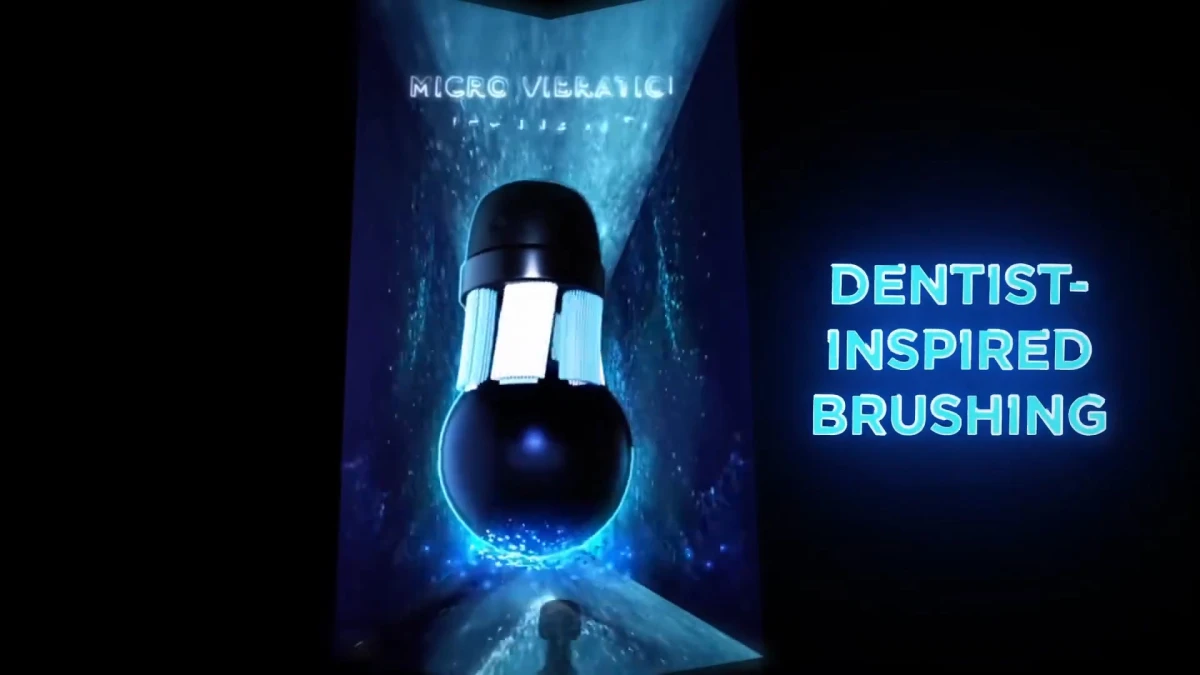
A product launch that needed reach beyond one field event paired a 45-foot projected structure with a national AR layer, detailed in the Oral-B product launch case study.
-
A car reveal that needed to be the finale of a live show, not a static prop, synced custom software to real-time choreography - see the Volkswagen projection mapping case study.
-
A crowd that shows up expecting spectacle, not sales pitches, got a personalised, camera-triggered experience instead of a banner - full story in the Maruti Suzuki Comic Con case study.
Four very different stories, one shared decision: none of them tried to fit on a banner. Browse the wider range of builds on IIC Lab's projection mapping use cases page and projection mapping services overview.
Tips for Brands to Create Memorable Interactive Installations
-
Think in acts, not slides. If your story has a beginning, a turn, and a payoff, design the installation to move through all three - not present them simultaneously.
-
Budget for a dress rehearsal as a line item, not an afterthought squeezed into setup day. It's the single step that catches the most expensive mistakes.
-
Treat the technical brief as part of the creative brief. Projector throw distance and surface material aren't logistics details - they shape what content is even possible.
-
Plan for what happens after the projector turns off. A digital layer, a takeaway asset, a follow-up touchpoint - the story needs a life beyond the room it was built in.
What Retail Brands Gain When They Retire the Static Poster
Retail brands with layered stories - heritage, sustainability commitments, a full product range - face the exact same flattening problem as any complex B2B story, just on a shop floor instead of a briefing room. Brands that have shifted from static in-store displays to genuinely experiential moments report meaningful sales lift as a direct result - recent industry data puts the figure at over 15% within three months of an activation for many brands that made the switch. A story with room to unfold tends to convert better than one crammed onto a poster, in retail exactly as much as anywhere else.
Bringing a Complex Brand Story to Life
The math on this is increasingly hard to ignore: experiential activations, measured properly, deliver returns in the region of 3:1 to 5:1 for roughly half of the brands running them - and static displays were never designed to carry a story with that much riding on it. If your brand has more to say than a banner can hold, the format is the fix, not the budget.
A few questions brand teams often ask before making the switch
Is projection mapping only worth it for very large brand stories? No - the same layering and pacing principles apply at a smaller scale, whether it's a single zone or a full experience centre.
How do we know if our story is "too complex" for a static display? A simple test: if your current display needs a person standing next to it explaining what it means, the format has already failed. That's a sign the story needs room to move.
What's the first step if we're not sure where to start? A surface survey and a content strategy conversation - the same starting point IIC Lab uses for every build, regardless of scale.
If your brand's story has outgrown the banner it's currently stuck on, bring it to IIC Lab - let's give it the room it actually needs.
What's Your Reaction?
 Like
0
Like
0
 Dislike
0
Dislike
0
 Love
0
Love
0
 Funny
0
Funny
0
 Wow
0
Wow
0
 Sad
0
Sad
0
 Angry
0
Angry
0











.png)



Comments (0)