

Inside the Rise of Oncloud: How a Small Swiss Idea Reshaped the Way the World Thinks About Comfort
The story of how Oncloud reached this point is not a simple tale of clever advertising.
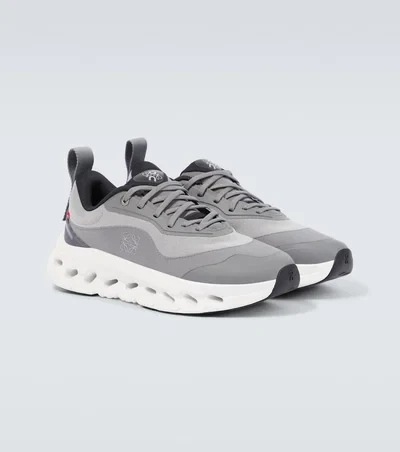
Walk through any major airport terminal today and count how many pairs of shoes you see with small rubber pods dotting the sole. It will not take long before the number climbs into the dozens. What was once a niche piece of running gear known mostly to endurance athletes has become one of the most recognizable silhouettes in modern footwear, worn by grandmothers on morning walks, nurses on hospital floors, remote workers pacing during video calls, and hikers scaling rocky trails. The story of how Oncloud reached this point is not a simple tale of clever advertising. It is a story about obsession with a single physical problem, a refusal to compromise on an unusual design, and a slow, almost accidental discovery that comfort itself could become a lifestyle statement.
The Problem That Started Everything
Long before the brand existed, its founder was simply a frustrated athlete. Traditional running shoes at the time forced a strange compromise on every runner's foot. Either the shoe was cushioned enough to absorb the repeated pounding of long-distance running, in which case it felt soft, unstable, and slow to react, or it was firm and responsive, in which case every stride sent a jolt through the knees and hips. Nobody had managed to build a shoe that did both things at once, cushioning the landing while staying snappy on the push-off. That contradiction sat unresolved for years, treated as simply the nature of running shoes, until one athlete decided the problem was solvable with the right structural idea rather than the right chemical foam blend. The breakthrough came not from a laboratory but from ordinary materials lying around a workshop, reshaped into hollow pods that could behave completely differently depending on the direction of the force pressing into them.
Engineering Explained in Plain Language
It helps to understand, in simple terms, what actually happens underneath the foot with each step. The hollow pods along the sole are positioned to face downward and slightly outward. When the foot lands, the pods compress inward and upward, absorbing the shock the same way a shock absorber softens a car's ride over a bump. But because the pods are hollow and specifically shaped, that compression does not continue indefinitely into a mushy collapse. Once compressed to a certain point, the pod structure locks together, creating a dense, stable platform. That locked platform is what allows the foot to push off the ground with real force rather than sinking into soft material. In essence, the sole behaves like two different shoes stacked into one: a soft one for landing and a firm one for launching. This is the mechanical secret behind why the sensation of wearing these shoes feels so distinct from anything built with traditional cushioning foam.
From Elite Athletes to Everyday Wardrobes
The earliest adopters of this technology were serious runners chasing marginal gains in performance, the kind of athletes who obsess over milliseconds and joint stress after decades of training. But comfort technology built for elite performance rarely stays contained to that small audience for long, especially when it happens to look striking and feel remarkable to casual wearers too. Word spread through word of mouth long before major advertising campaigns took hold. People who tried the shoes for a single run often kept wearing them for grocery runs, dog walks, and long shifts on their feet. Physical therapists began recommending them to patients recovering from joint issues. Travel bloggers praised them for surviving endless hours of walking through unfamiliar cities without the usual foot fatigue. This slow, organic spread from a specialized athletic niche into everyday life is a large part of why the brand's growth has felt less like a marketing triumph and more like a genuine grassroots movement built on repeated personal experience.
Building a Full Ecosystem Around One Idea
A single clever shoe design rarely sustains a company for long unless it evolves, and the brand behind On Cloud Runners understood this early. Instead of resting on the success of its original running shoe, it began expanding the pod technology into other categories of movement. Hiking shoes were developed with reinforced traction and weatherproofing while keeping the same cushioned-yet-responsive core. Tennis shoes were engineered with lateral stability in mind, since the pod technology needed adjustment to handle sideways movement rather than just forward motion. Everyday walking shoes softened some of the more aggressive performance features in favor of long-lasting all-day comfort. Even apparel eventually entered the lineup, built with the same philosophy of lightweight materials that do not sacrifice function for the sake of looking minimal. This steady expansion transformed a single shoe model into a full ecosystem, giving the brand staying power well beyond the initial novelty of its unusual sole.
Why the Look Became Just as Important as the Feel
There is an old assumption in footwear design that says performance technology should be hidden, tucked away beneath sleek exteriors so the shoe still looks conventional. Oncloud rejected that assumption almost entirely. By leaving the pods visible along the sole, the brand made an implicit statement: the technology is the design, and there is no need to disguise it. This turned out to be a brilliant, if perhaps unintentional, marketing decision. In a world where photographs of shoes circulate endlessly across social platforms, a distinctive, easily identifiable silhouette spreads faster and sticks in memory longer than a shoe indistinguishable from a dozen competitors. People began recognizing the brand at a glance, the same way certain sneaker silhouettes from other companies became instantly identifiable decades ago. Visual honesty about how the shoe works became, paradoxically, one of its strongest style statements.
Honest Limitations Worth Knowing
For all its innovation, the design is not without its practical downsides. The open structure of the pods means small stones, twigs, and debris can occasionally lodge themselves in the gaps, requiring an occasional pause to shake them loose during outdoor use. The unusual cushioning also wears differently than traditional foam, meaning long-term owners need to watch for uneven compression rather than simple tread wear. And because the technology involves more complex manufacturing than a standard foam sole, prices tend to sit well above entry-level athletic shoes, putting them out of reach for buyers strictly shopping on a budget. These are not minor details to gloss over, and any fair account of the brand's success has to acknowledge that the shoes are a genuine investment rather than an impulse purchase.
A Design Philosophy That Keeps Evolving
What makes this story worth paying attention to is not just the shoes themselves but the underlying philosophy that produced them: the belief that everyday physical comfort deserves the same rigorous engineering attention usually reserved for elite sports equipment. That philosophy has continued to drive newer releases, with lighter materials, improved breathability, and increasingly specialized versions built for specific terrains and activities. Sustainability efforts have also entered the picture, with recycled materials and shoe recycling programs becoming part of ongoing development. Whether or not competitors eventually replicate or surpass the pod technology, the underlying lesson remains valuable on its own: sometimes the most transformative ideas do not come from massive corporate research budgets, but from one person refusing to accept an old, unquestioned trade-off as permanent.
What's Your Reaction?
 Like
0
Like
0
 Dislike
0
Dislike
0
 Love
0
Love
0
 Funny
0
Funny
0
 Wow
0
Wow
0
 Sad
0
Sad
0
 Angry
0
Angry
0

















Comments (0)