

What Does a Smart Hospital Look Like?
Discover what a smart hospital looks like, from AI and IoT to EHRs, automation, cybersecurity, connected devices, and intelligent healthcare workflows.
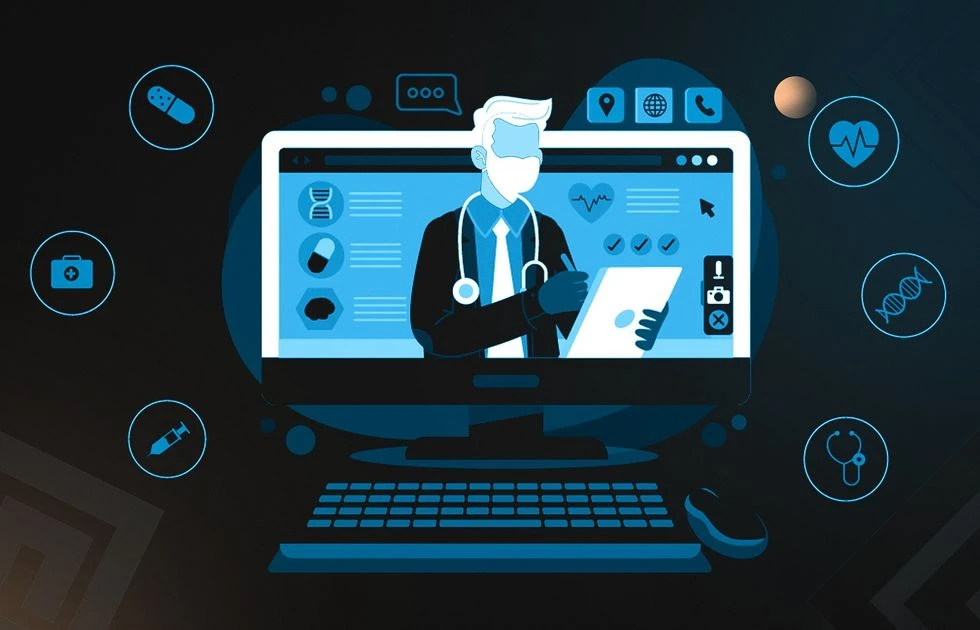
Imagine walking into a hospital where registration happens digitally, doctors can instantly access a patient’s medical history, medical devices continuously share relevant information, and hospital administrators can monitor operations from a centralized dashboard. Instead of relying heavily on paper records, disconnected systems, and manual processes, the hospital uses connected technologies to make healthcare delivery more coordinated, efficient, and responsive. This is the basic idea behind a smart hospital.
A smart hospital combines digital infrastructure, connected medical technologies, automation, data analytics, artificial intelligence (AI), and intelligent workflows to improve patient care and hospital operations. Modern research describes smart hospitals as environments where technologies such as the Internet of Medical Things, cloud computing, AI, robotics, telemedicine, and advanced connectivity work together across clinical and administrative functions.
What Is a Smart Hospital?
A smart hospital is more than a healthcare facility filled with computers and modern medical equipment. It is an interconnected environment in which technology helps different departments communicate, information move efficiently, and healthcare professionals make better-informed decisions. The objective is to use digital tools to improve care quality while reducing unnecessary delays, duplication, and administrative workload.
The World Health Organization emphasizes the importance of interoperability and data sharing in digital health because connected systems can support informed decision-making and better coordination. In a smart hospital, information should therefore move securely between appropriate departments and systems rather than remain trapped in isolated databases.
A Connected Patient Experience
The smart hospital experience often begins before the patient enters the building. Online appointment scheduling, digital registration, automated reminders, electronic payments, and patient portals can reduce the amount of paperwork required at reception. Patients may be able to confirm appointments, access instructions, and communicate with healthcare providers through digital channels.
Inside the hospital, digital displays, mobile applications, self-service kiosks, and electronic communication systems can make navigation and communication easier. Technology can also support personalized interactions by making relevant patient information available to authorized healthcare professionals when it is needed.
Electronic Health Records at the Center
An electronic health record (EHR) can serve as an important foundation for a smart hospital. Instead of maintaining information across separate paper files, an integrated digital record can bring together relevant clinical information such as medical history, diagnoses, medications, laboratory results, and clinical notes.
However, simply having an EHR does not automatically make a hospital smart. The real value comes when different systems can communicate securely and meaningfully. Interoperability allows information to move between departments and healthcare providers, supporting continuity of care and reducing the need to repeatedly collect the same information.
Intelligent Medical Devices and IoT
A smart hospital can connect medical devices through the Internet of Medical Things (IoMT). Sensors and connected equipment can collect and transmit information that helps healthcare professionals monitor patients and hospital resources.
For example, connected monitoring devices can provide real-time information about vital signs, while location technologies can help staff locate equipment or track assets. Research on smart hospital services identifies IoT, location tracking, mobile health, AI, robotics, extended reality, and telehealth among the technologies contributing to smart healthcare environments.
Artificial Intelligence in Clinical Care
Artificial intelligence can make a smart hospital more predictive and responsive. AI systems can analyze large volumes of information and identify patterns that may be difficult to recognize manually. Depending on the clinical application, AI can support medical imaging, risk prediction, decision support, documentation, scheduling, and other healthcare workflows.
The role of AI should be to support healthcare professionals rather than replace appropriate clinical judgment. When implemented responsibly, AI can reduce repetitive administrative tasks and provide clinicians with useful insights, allowing them to spend more time focusing on patients. Modern smart-hospital frameworks increasingly consider AI and advanced analytics important components of connected healthcare environments.
Automation Behind the Scenes
Patients may not see many of the technologies that make a hospital smart because some of the most important improvements happen behind the scenes. Automated workflows can help manage appointments, billing, inventory, staff activities, pharmacy processes, laboratory orders, and other administrative functions.
Automation can reduce repetitive manual work and minimize avoidable errors caused by transferring information between multiple systems. A centralized operational view can also help hospital managers understand workload, resource utilization, and bottlenecks, making it easier to respond to changing circumstances.
Smart Laboratories and Pharmacies
A smart hospital extends beyond doctors and patient rooms. Laboratory and pharmacy departments can also become integrated into the hospital's digital ecosystem. Electronic laboratory orders can move directly into laboratory workflows, while test results can be returned digitally to authorized clinicians and patient records.
Similarly, pharmacy systems can support medication management, inventory monitoring, dispensing workflows, and communication between clinical departments. When these functions are connected, hospitals can reduce information gaps and create a smoother flow of data from diagnosis to treatment.
Smart Patient Rooms
The patient room of a smart hospital can also look very different from a traditional hospital room. Connected devices may monitor relevant patient information, while digital communication tools can help patients interact with nurses and other staff. Some facilities are experimenting with technologies such as wearable sensors, digital bedside interfaces, virtual visits, and AI-assisted monitoring.
The purpose of these technologies is not to make rooms unnecessarily complicated. Instead, they should improve comfort, communication, monitoring, and safety. A well-designed smart room uses technology in the background so that patients can receive a more convenient and coordinated experience.
Cybersecurity and Data Privacy
A hospital cannot truly be considered smart if its digital infrastructure is poorly protected. The more systems a hospital connects, the more important cybersecurity becomes. Patient information, medical devices, employee accounts, and operational systems can all become potential targets for cyberattacks.
Strong authentication, access controls, encryption, network protection, monitoring, secure backups, employee awareness, and incident-response planning should therefore be built into smart hospital strategies. WHO notes that healthcare's increasing digital transformation has also made the sector more exposed to cyber risks.
Sustainable and Resilient Infrastructure
Smart hospitals are not only about digital technology. A broader concept of smart healthcare facilities also includes resilient infrastructure, energy efficiency, environmental management, and the ability to continue operating during emergencies. PAHO's Smart Hospitals initiative, for example, emphasizes facilities that are safe, green, and maintained while improving resilience to disasters.
Energy-efficient equipment, renewable energy systems, intelligent building management, water conservation, emergency power, and resilient infrastructure can help hospitals maintain essential services while managing operational costs and environmental impact.
What Does a Smart Hospital Look Like for Staff?
For healthcare professionals, a smart hospital should mean less time spent searching for information and performing repetitive administrative tasks. Doctors should be able to access relevant patient information efficiently, nurses should have clear workflows, and administrators should have reliable operational data for decision-making.
Technology should simplify work rather than create additional complexity. Successful smart hospitals therefore require staff training, intuitive systems, appropriate implementation, and continuous evaluation. Digital transformation works best when technology is designed around actual clinical and operational needs.
What Makes a Hospital Truly Smart?
The defining feature of a smart hospital is not the number of technologies it owns. A facility with expensive equipment but disconnected systems may still operate inefficiently. A truly smart hospital connects technology with people, processes, information, and measurable healthcare objectives.
Interoperability is especially important because different systems need to exchange information effectively. WHO and HL7 have emphasized open interoperability standards as a way to help digital health solutions communicate and support continuity of care.
The Future of Smart Hospitals
The future smart hospital is likely to become increasingly data-driven, automated, connected, and patient-centered. AI, predictive analytics, robotics, remote monitoring, cloud platforms, connected devices, and digital patient services will continue influencing how hospitals operate.
However, technology should remain a means rather than the final objective. The most successful smart hospitals will be those that use technology to improve patient safety, clinical decision-making, staff efficiency, accessibility, resilience, and the overall quality of care.
Conclusion
A smart hospital looks like a connected healthcare ecosystem where digital records, intelligent devices, AI, automation, interoperable systems, cybersecurity, and sustainable infrastructure work together to support better outcomes. It is not simply a high-tech building; it is an integrated approach to delivering healthcare more efficiently and intelligently. Organizations such as Instacare.com.pk can contribute to this digital transformation by providing technology that helps healthcare facilities organize their clinical and administrative workflows. As hospitals in Pakistan continue moving toward digital healthcare, adopting reliable Hospital Management Software in Pakistan can be an important step toward building a more connected, efficient, and future-ready hospital.
What's Your Reaction?
 Like
0
Like
0
 Dislike
0
Dislike
0
 Love
0
Love
0
 Funny
0
Funny
0
 Wow
0
Wow
0
 Sad
0
Sad
0
 Angry
0
Angry
0













Comments (0)