

Why Do Some Diamonds Have a Dark Center?
Wondering why some diamonds have a dark center? Learn about the bowtie effect, which shapes show it most, and how to tell it apart from a flaw.
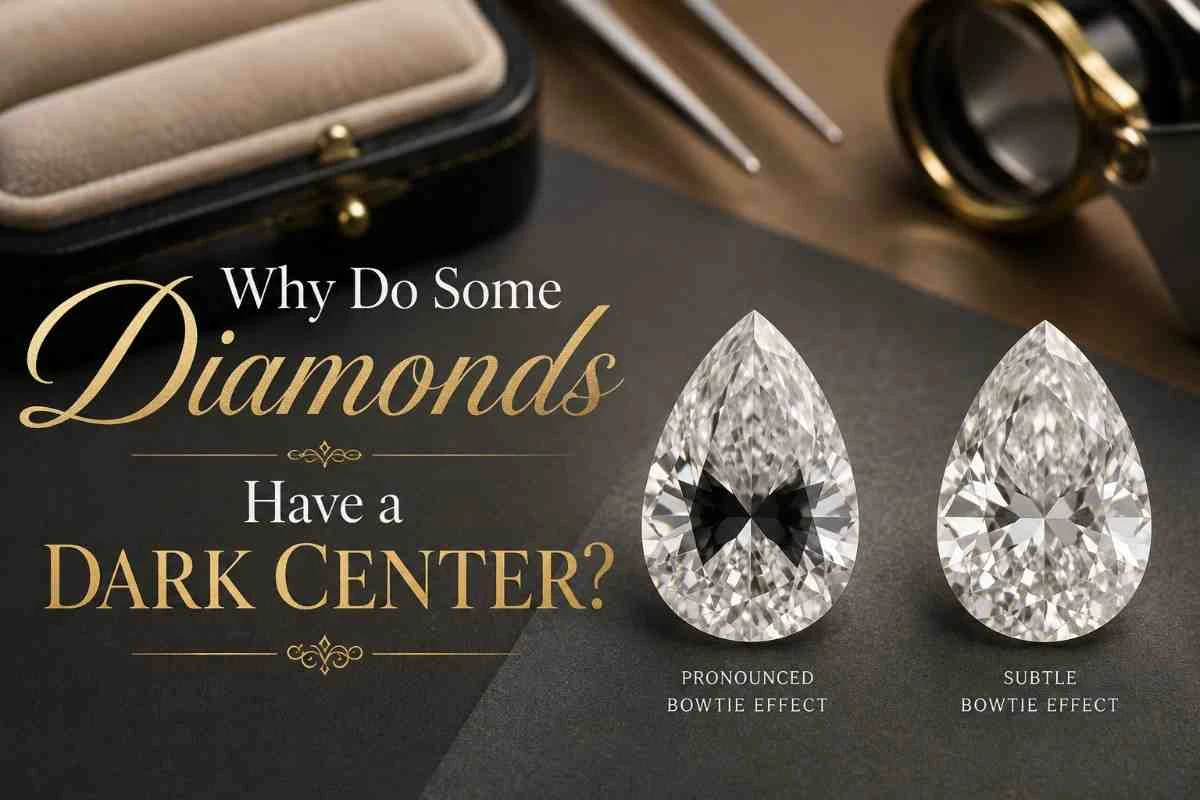
A diamond is supposed to sparkle from edge to edge, so it's unsettling to notice a dark patch sitting right in the middle of an otherwise bright stone. It looks like a flaw. Sometimes it even gets mistaken for a crack or a serious inclusion. In most cases, it isn't either of those things. It's an optical effect, and once you understand what's actually causing it, that dark center stops looking like a defect and starts looking like something you can evaluate properly before buying.
This guide breaks down exactly what causes a dark center in a diamond, which shapes are most prone to it, and how to tell a normal optical effect apart from an actual quality problem.
The Dark Center Is Usually Light, Not a Flaw
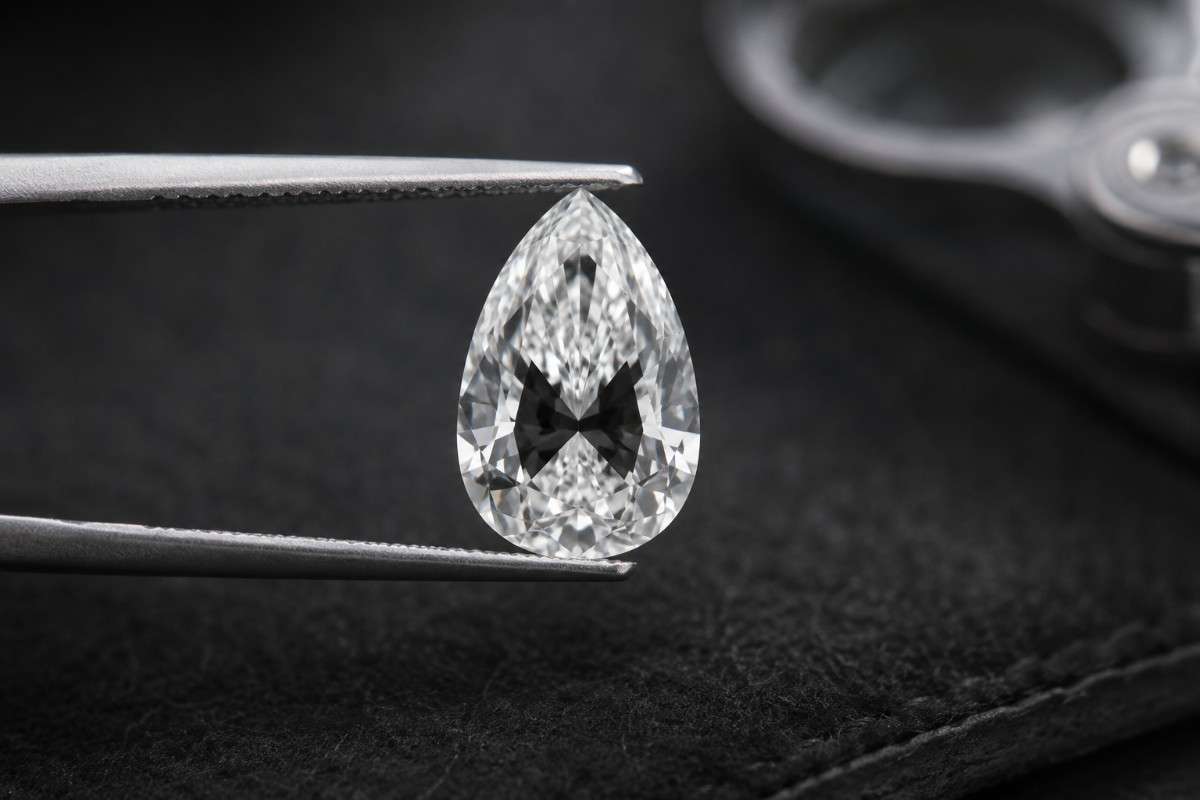
Counterintuitively, that dark patch is often caused by too little light escaping the stone in that specific area, not by anything wrong with the diamond's material. Diamonds sparkle because light enters the stone, bounces internally, and exits back through the top. When part of that internal reflection doesn't return light to the eye, that area reads as dark instead of bright, even though the diamond itself is completely clean.
This effect has a name in the industry: the bowtie effect, most common in diamond shapes with elongated, pointed profiles.
What Causes the Bowtie Effect
The bowtie effect happens because of how light travels through certain diamond shapes. In elongated cuts, the facets near the center don't always align to reflect light directly back to the viewer's eye. Instead, some of that light exits through the sides or bottom of the stone, leaving a shadow-like dark area shaped roughly like a bowtie across the center.
A few factors influence how noticeable this effect becomes:
- Cutting angles. Poorly optimized facet angles increase the size and darkness of the bowtie.
- Depth and proportions. A diamond cut too shallow or too deep disrupts how light reflects internally, often worsening the effect.
- Viewing angle and lighting. The bowtie effect can appear stronger or weaker depending on how the stone is tilted and lit, which is why the same diamond can look different in different photos.
Which Diamond Shapes Are Most Prone to This
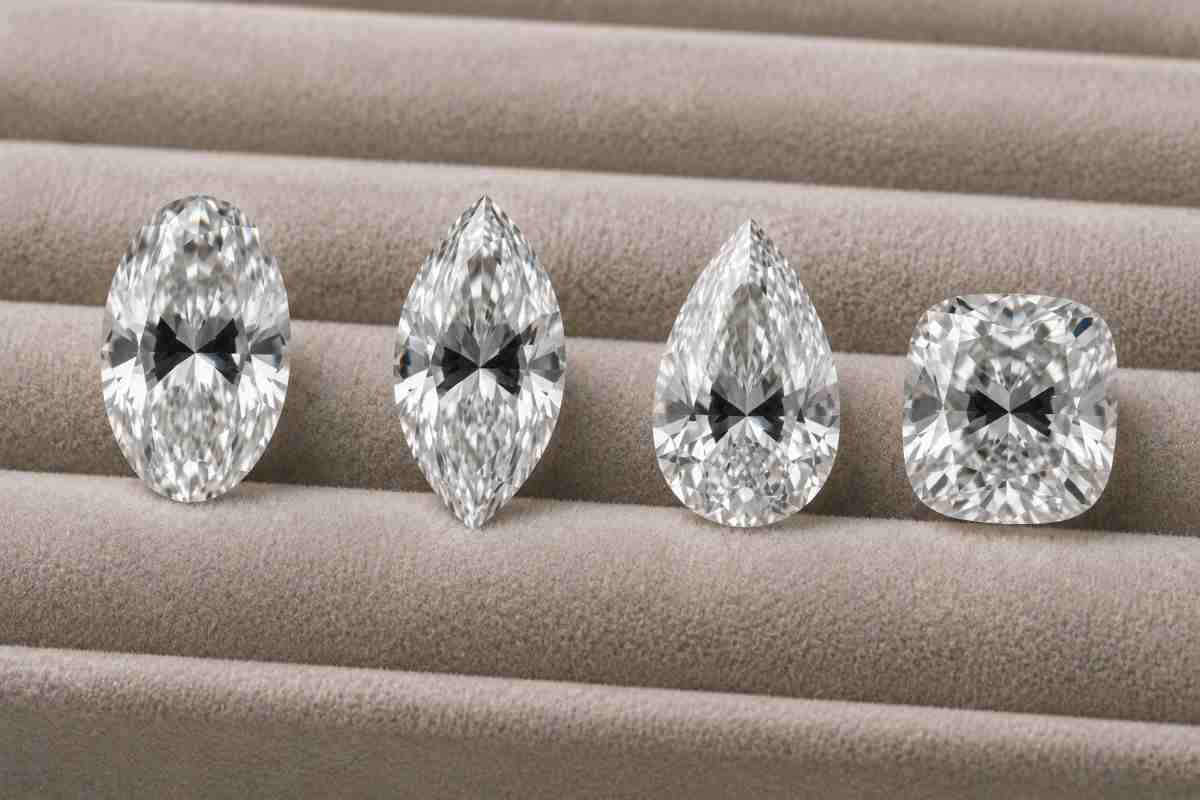
Not every diamond shape shows a bowtie effect. It shows up almost exclusively in elongated cuts, where the length-to-width ratio creates natural gaps in light return near the center.
Shapes commonly affected include:
- Oval cuts, one of the most common shapes to show a visible bowtie
- Marquise cuts, due to their long, pointed silhouette
- Pear cuts, which combine a point and a curve in a way that can create a similar effect
- Some elongated cushion cuts, though less consistently than the shapes above
Round and princess cuts, by comparison, rarely show a noticeable bowtie, since their proportions distribute light more evenly across the stone.
A Small Bowtie Isn't Necessarily a Problem
This is worth saying clearly: a subtle bowtie effect is completely normal in many elongated diamonds, and plenty of buyers actually like the added dimension and contrast it brings to the stone. It's not automatically a sign of poor quality.
The real question isn't whether a bowtie exists at all. It's how noticeable and how dark it is. A faint, subtle shadow that adds visual depth is very different from a large, heavy dark patch that dominates the center of the stone and noticeably reduces overall brilliance.
When a Dark Center Signals a Real Quality Issue
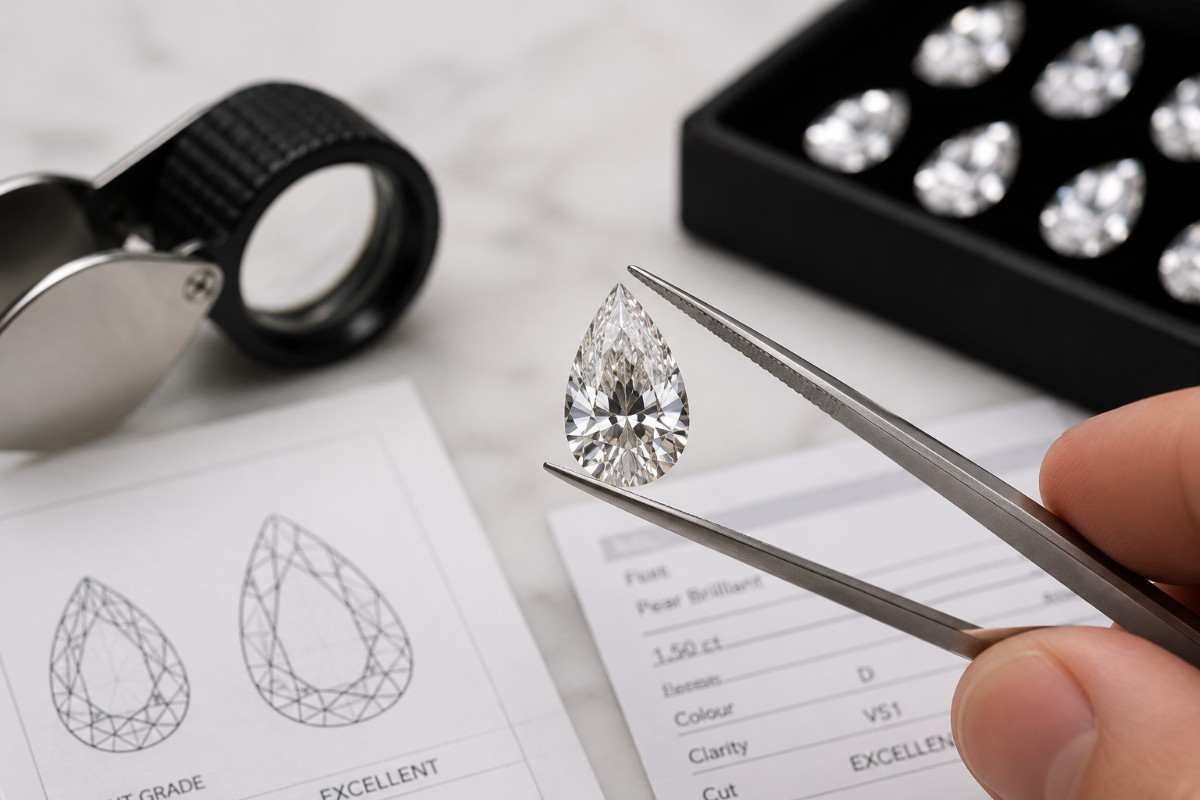
While most dark centers come from the bowtie effect, a few situations point to an actual cut-quality problem worth avoiding.
- An unusually large, heavy bowtie that dominates more than a small portion of the stone's face
- Poor overall cut grade listed on the certificate, which often correlates with a more pronounced, less attractive bowtie
- Visible dullness across the entire stone, not just a centered shadow, which may indicate broader cut or proportion issues rather than a normal optical effect
- A dark spot that doesn't shift or lighten at all when the stone is tilted, which is worth having a jeweler examine directly, since genuine inclusions behave differently than light-based effects
If you're shopping for an elongated shape, like a pear shaped engagement ring, it's worth specifically asking to see the stone from multiple angles or requesting a video, since photos alone don't always represent how noticeable the bowtie effect will be in person.
How to Evaluate a Diamond With a Visible Bowtie
A few practical checks help separate a normal, attractive bowtie from a genuine quality concern.
- Ask for video, not just photos. Movement reveals how the effect changes with light and angle, which a still photo can't show.
- Check the cut grade on the certificate. A well-cut stone typically shows a more balanced, subtle bowtie than a poorly proportioned one.
- Compare multiple stones of the same shape, since bowtie intensity varies noticeably even within the same diamond shape and size.
- View the stone in different lighting, since a bowtie can look more or less prominent depending on whether the light is natural, warm, or bright and direct.
Does Setting Style Affect How Noticeable a Dark Center Looks?
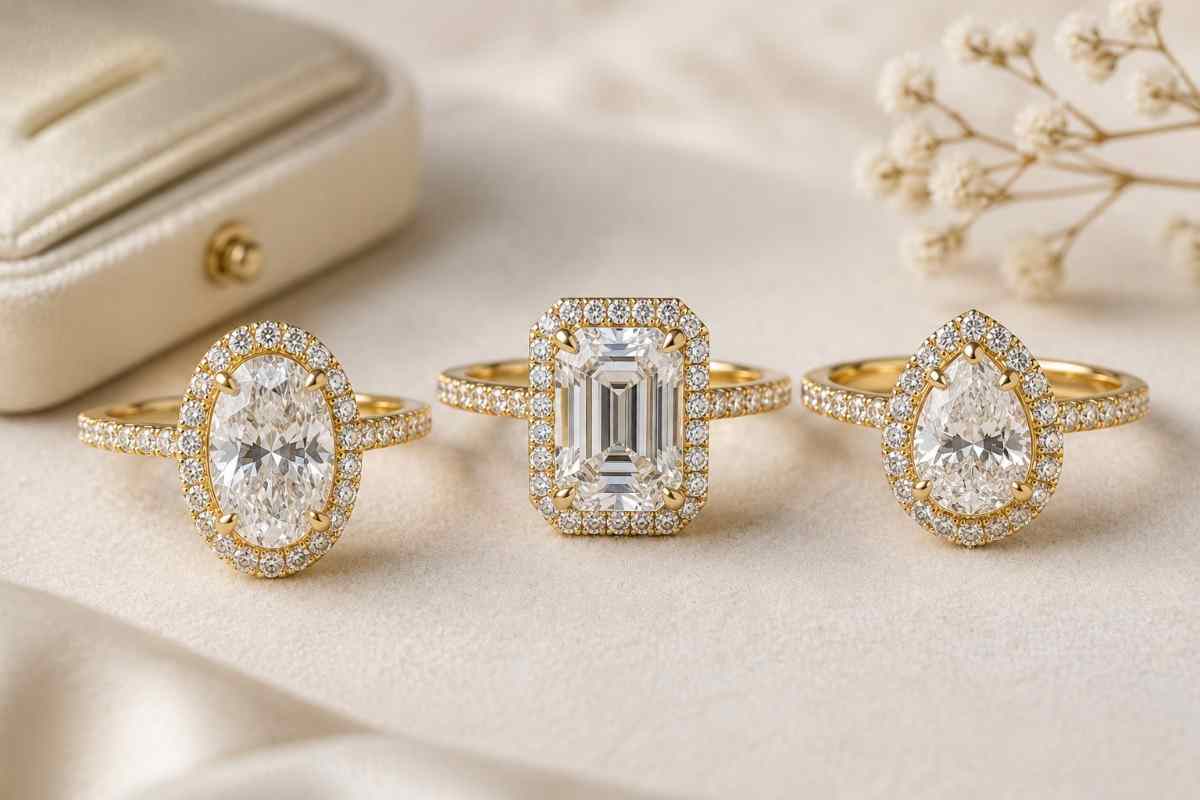
Setting choice can influence how a bowtie effect reads visually, even though it doesn't change the diamond itself. A busier setting with more surrounding brilliance can sometimes soften the visual impact of a center shadow, sin
ce the eye has more sparkle nearby to balance against.
This is one reason some buyers pair elongated center stones with gold halo rings, since the surrounding stones add extra brightness around the center, which can make a subtle bowtie feel like part of the design rather than a standalone flaw.
Frequently Asked Questions
1. Is a dark center in a diamond a sign of low quality?
Ans.- Not necessarily. In most cases, it's the bowtie effect, a normal optical result of how light travels through certain elongated diamond shapes, and it doesn't indicate a flaw in the stone itself.
2. Which diamond shapes are most likely to show a bowtie effect?
Ans.- Oval, marquise, and pear-shaped diamonds show this effect most often, due to their elongated proportions. Round and princess cuts rarely display a noticeable bowtie.
3. Can a bowtie effect be avoided entirely?
Ans.- It can be minimized through better cut quality and proportions, but a very subtle bowtie is common even in well-cut elongated diamonds and isn't always something to avoid entirely.
4. How do I know if a bowtie effect is too strong?
Ans.- If the dark area dominates a large portion of the stone's face or noticeably reduces overall brilliance, it's worth comparing against other stones or asking a jeweler for a direct opinion.
5. Does a dark center mean the diamond has an inclusion?
Ans.- Usually not. A true inclusion typically stays visible regardless of angle, while a bowtie effect shifts or changes as the stone is tilted or viewed under different lighting.
The Bottom Line
A dark center in a diamond usually isn't a defect — it's the bowtie effect, an optical result of how light moves through certain elongated shapes. A subtle version is completely normal and even desirable to many buyers, while a heavy, dominant bowtie is worth comparing against other stones before deciding. Understanding the difference turns an alarming-looking shadow into just one more detail to evaluate confidently before you buy.
Frequently Asked Questions
What's Your Reaction?
 Like
0
Like
0
 Dislike
0
Dislike
0
 Love
0
Love
0
 Funny
0
Funny
0
 Wow
0
Wow
0
 Sad
0
Sad
0
 Angry
0
Angry
0















Comments (0)