

How Can RWA Tokenization Bring Greater Flexibility to Traditional Asset Markets?
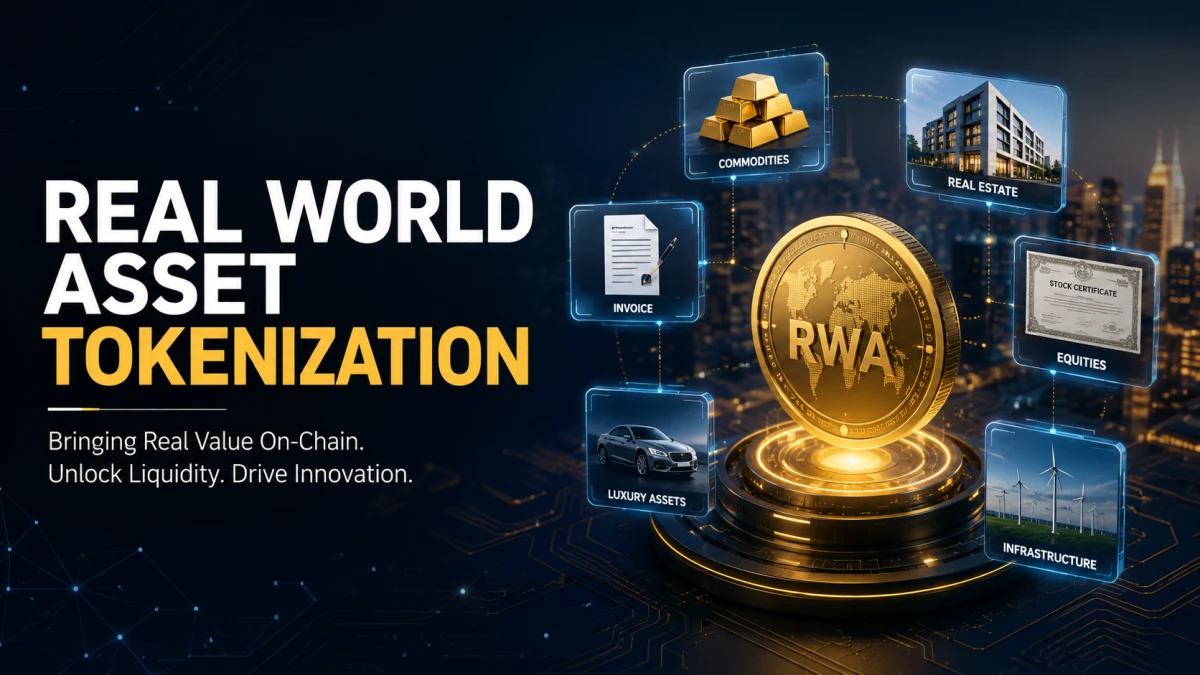
Traditional asset markets have long relied on established ownership structures, centralized intermediaries, lengthy settlement processes, and relatively rigid investment models. While these systems provide familiarity and regulatory oversight, they can make certain assets difficult to divide, transfer, finance, or access.
Real-world asset (RWA) tokenization introduces a more flexible approach by representing physical or traditional financial assets as blockchain-based digital tokens. Real estate, bonds, commodities, private credit, infrastructure, intellectual property, and other assets can potentially be represented through tokenized structures, depending on applicable laws and the rights attached to the tokens.
The significance of RWA tokenization goes beyond simply putting assets on a blockchain. Its greater value comes from making ownership and financial rights more programmable, divisible, transparent, and potentially easier to transfer.
What Is RWA Tokenization?
RWA tokenization is the process of representing ownership interests, economic rights, or claims associated with real-world assets through digital tokens recorded on a blockchain.
Depending on the legal structure, a token may represent:
- Fractional ownership of an asset
- A claim on income generated by an asset
- Debt or repayment rights
- Fund interests
- Licensing or royalty rights
- Collateralized financial exposure
The underlying asset generally remains connected to an off-chain legal and operational framework. Blockchain technology provides the digital infrastructure for recording, transferring, and automating activities associated with the tokenized interest. This combination of traditional legal ownership and blockchain-based infrastructure is what gives RWA tokenization its flexibility.
How Can RWA Tokenization Create Greater Flexibility?
1. Fractionalizing Traditionally Large Assets
One of the clearest ways tokenization adds flexibility is through fractional ownership. Traditional assets such as commercial buildings, infrastructure projects, private companies, and high-value collectibles can require substantial amounts of capital. Tokenization can divide the economic interest in these assets into smaller digital units. For example, rather than requiring one investor to purchase an entire property, a legally structured tokenized offering could provide multiple investors with fractional interests.
This creates greater flexibility in:
- Investment size
- Ownership participation
- Portfolio construction
- Capital allocation
Fractionalization can therefore make traditionally inaccessible assets available to a broader group of eligible investors.
2. Creating More Flexible Ownership Structures
Traditional ownership structures are often difficult to modify once established. Tokenization can introduce more adaptable models for representing different economic rights. A tokenized asset could potentially separate ownership, income, governance, and other rights into clearly defined structures. For example, one class of tokens might represent economic interests while another could represent governance rights. The exact structure depends on the legal arrangement and applicable regulations. This flexibility can help asset owners design investment models that better match the needs of different participants.
3. Improving Transferability
Transferring traditional assets can involve paperwork, brokers, registrars, custodians, and settlement institutions. Tokenization can simplify the technical process of transferring digital representations of asset interests. Ownership records can be updated on a blockchain when an authorized transfer occurs. Smart contracts can also establish conditions under which transfers are permitted. This can create more flexible transfer mechanisms while still incorporating restrictions such as:
- Investor eligibility
- Geographic limitations
- Holding periods
- Compliance requirements
- Transfer approvals
Therefore, tokenization does not necessarily mean unrestricted trading. Instead, it can make compliant transfers more programmable.
4. Enabling Programmable Asset Markets
Traditional assets generally operate through external systems that manage payments, ownership changes, and compliance. Tokenized assets can incorporate programmable rules directly into smart contracts. For example, a tokenized bond could include automated interest distributions. A tokenized real estate investment could distribute eligible rental income according to predefined ownership percentages. This programmability enables financial processes to become more automated and adaptable.
5. Supporting Faster Settlement
Traditional asset transactions often require multiple stages of reconciliation and settlement. Blockchain-based infrastructure can reduce the number of separate systems involved in recording transactions. Depending on the network and market structure, tokenized assets can support significantly faster settlement. This can provide greater flexibility for investors and institutions managing capital. Faster settlement may also reduce the period during which capital remains tied up between trade execution and final settlement.
6. Expanding Access to Alternative Investments
Many traditional investment opportunities have historically been available primarily to institutional investors or high-net-worth participants. Tokenization can potentially lower investment thresholds through fractionalization.
This could create broader access to:
- Private credit
- Commercial real estate
- Infrastructure
- Private equity
- Tokenized bonds
- Commodity-linked assets
- Other alternative investments
However, accessibility remains subject to securities regulations, investor qualification requirements, minimum investment rules, and platform restrictions.
Flexibility Across Different Asset Classes
Real Estate
Real estate is one of the most frequently discussed applications of RWA tokenization. Properties can potentially be structured into fractional interests, allowing investors to gain exposure without purchasing an entire building. Tokenization can also support flexible models involving rental income, property development financing, and portfolio-based real estate investments.
Bonds and Fixed-Income Assets
Tokenized bonds can automate interest payments, maturity processes, and ownership records. Instead of relying entirely on traditional infrastructure, issuers can use smart contracts to manage predefined financial events. This creates a more programmable approach to fixed-income markets.
Private Credit
Private credit assets can be difficult to access and transfer because they are typically structured through private agreements. Tokenization can represent claims on loan portfolios or individual credit instruments, potentially creating more standardized digital representations. This could make private credit markets more flexible for eligible investors and lenders.
Commodities
Gold, agricultural commodities, energy-related assets, and other commodities can potentially be represented through tokens linked to underlying assets or claims. Tokenization can provide digital ownership records and potentially make certain commodity exposures easier to transfer. The effectiveness of such structures depends heavily on custody, redemption, auditing, and legal enforceability.
Infrastructure Assets
Infrastructure projects often require significant capital and have long investment horizons. Tokenization can potentially divide economic interests in infrastructure projects into smaller units, creating additional fundraising opportunities. This could help connect infrastructure developers with a wider pool of capital while creating new investment structures.
7. Enabling New Liquidity Models
Liquidity is one of the biggest challenges associated with traditional assets. Tokenization can create the infrastructure for secondary markets where tokenized asset interests may be transferred between eligible participants.
However, tokenization itself does not automatically create liquidity.
A liquid market requires:
- Sufficient buyers and sellers
- Regulatory approval
- Reliable pricing
- Market infrastructure
- Investor participation
- Standardized assets
When these conditions exist, tokenization can make asset interests easier to transfer and potentially create more flexible exit opportunities.
8. Improving Portfolio Diversification
Tokenization can allow investors to allocate smaller amounts across multiple asset categories. Instead of concentrating capital in one large asset, an investor could potentially gain exposure to several tokenized assets.
For example, a portfolio could include fractional interests in:
- Real estate
- Bonds
- Private credit
- Infrastructure
- Commodities
This flexibility can support more granular portfolio construction and risk management.
9. Automating Income Distribution
Many real-world assets generate recurring income. Rental properties generate rent, bonds generate interest, and certain intellectual property assets generate royalties. Tokenization can connect these income streams to smart contracts that distribute payments according to predefined rules. This can reduce manual administration and create more predictable distribution mechanisms. The underlying income still depends on actual asset performance, so automation does not eliminate financial risk.
10. Improving Transparency and Recordkeeping
Traditional asset markets often involve multiple databases maintained by different institutions. Blockchain-based tokenization can create a shared transaction record for authorized participants. Depending on the implementation, participants may gain greater visibility into:
- Token ownership
- Transaction history
- Asset activity
- Distribution records
- Issuance information
This can improve operational transparency and simplify auditing.
The Role of Smart Contracts in Flexible Asset Markets
Smart contracts are one of the most important components of tokenization infrastructure.
They can automate predetermined actions such as:
- Interest payments
- Dividend distributions
- Rental income allocation
- Ownership transfers
- Redemption procedures
- Compliance restrictions
For example, a tokenized financial instrument could be programmed to distribute income automatically on scheduled dates. This creates a more responsive financial infrastructure where certain processes can occur without manual intervention. However, smart contracts cannot independently guarantee that an off-chain event actually occurred. Reliable oracles, custodians, auditors, legal agreements, and other infrastructure may still be required.
Challenges That Can Limit Flexibility
Although RWA tokenization can introduce greater flexibility, several limitations remain.
Regulatory Complexity
Tokenized assets can fall under securities, property, investment, financial services, or other regulations depending on their structure and jurisdiction. Compliance requirements can restrict who can purchase or transfer tokens.
Legal Enforceability
A digital token only provides meaningful economic value when the rights attached to it are legally enforceable. Legal agreements must clearly establish the relationship between the token, underlying asset, issuer, and investor.
Limited Secondary Market Liquidity
A token can technically be transferable without having an active market. Limited buyers and sellers can prevent investors from realizing the liquidity benefits associated with tokenization.
Valuation Challenges
Some real-world assets are difficult to value frequently. Private companies, real estate, infrastructure, and intellectual property may require specialized valuation methodologies.
Technology Risks
Smart contract vulnerabilities, wallet security issues, blockchain outages, and interoperability challenges can affect tokenized asset markets.
Off-Chain Dependencies
Many tokenized assets remain dependent on physical custodians, property managers, legal entities, banks, auditors, and other traditional institutions. Consequently, tokenization does not completely eliminate traditional infrastructure.
What Does Greater Flexibility Mean for Asset Owners?
For asset owners, RWA tokenization can provide new ways to raise and manage capital. Instead of selling an entire asset, owners may potentially structure partial economic interests. This can enable them to unlock capital while maintaining exposure to the remaining asset.
Developers can also explore tokenized fundraising for real estate and infrastructure projects, while financial institutions can experiment with digitally native versions of bonds, funds, and credit products. This creates more options for capital formation and asset management.
What Does Greater Flexibility Mean for Investors?
For investors, tokenization can provide more granular access to alternative assets.
Potential advantages include:
- Smaller investment allocations
- Broader asset selection
- Faster digital transactions
- Programmable distributions
- Greater portfolio diversification
- Potential secondary-market access
The actual benefits depend on the specific tokenized asset and its legal and market structure.
The Future of Flexible Asset Markets
RWA tokenization could gradually transform traditional markets from static ownership systems into more programmable financial ecosystems.
Future tokenized markets may connect assets with automated compliance, digital identity, AI-powered analytics, decentralized settlement, and interoperable blockchain networks. This could enable investors to manage portfolios containing multiple tokenized asset classes through integrated digital infrastructure.
Financial institutions may also develop hybrid models where traditional securities systems interact directly with blockchain-based markets.
Rather than completely replacing conventional finance, tokenization is more likely to coexist with existing infrastructure while gradually modernizing specific parts of the financial system.
Conclusion
RWA tokenization can bring greater flexibility to traditional asset markets by making asset interests more divisible, transferable, programmable, and digitally accessible. From real estate and private credit to bonds, commodities, and infrastructure, tokenization creates new possibilities for ownership structures, capital formation, settlement, income distribution, and portfolio diversification. However, tokenization is not a shortcut around regulation or traditional asset management. Its success depends on strong legal frameworks, compliant infrastructure, reliable asset verification, market liquidity, and investor protection.
What's Your Reaction?
 Like
0
Like
0
 Dislike
0
Dislike
0
 Love
0
Love
0
 Funny
0
Funny
0
 Wow
0
Wow
0
 Sad
0
Sad
0
 Angry
0
Angry
0















Comments (0)