

How Clipping Services Help Brands Repurpose Content at Scale
Clipping services help brands, creators, and agencies turn long-form content into short-form assets that drive reach, visibility, and growth.
Long-form content still matters.
Podcasts build trust. Interviews create authority. Webinars educate. Livestreams feel personal. Founder videos give a brand a voice.
The problem is not the content itself. The problem is what happens after it gets published.
A lot of brands and creators invest serious time into producing long-form content, upload it once, maybe share it a few times, and then move on. Most of the value inside that recording gets left behind. That is where clipping services make a real difference.
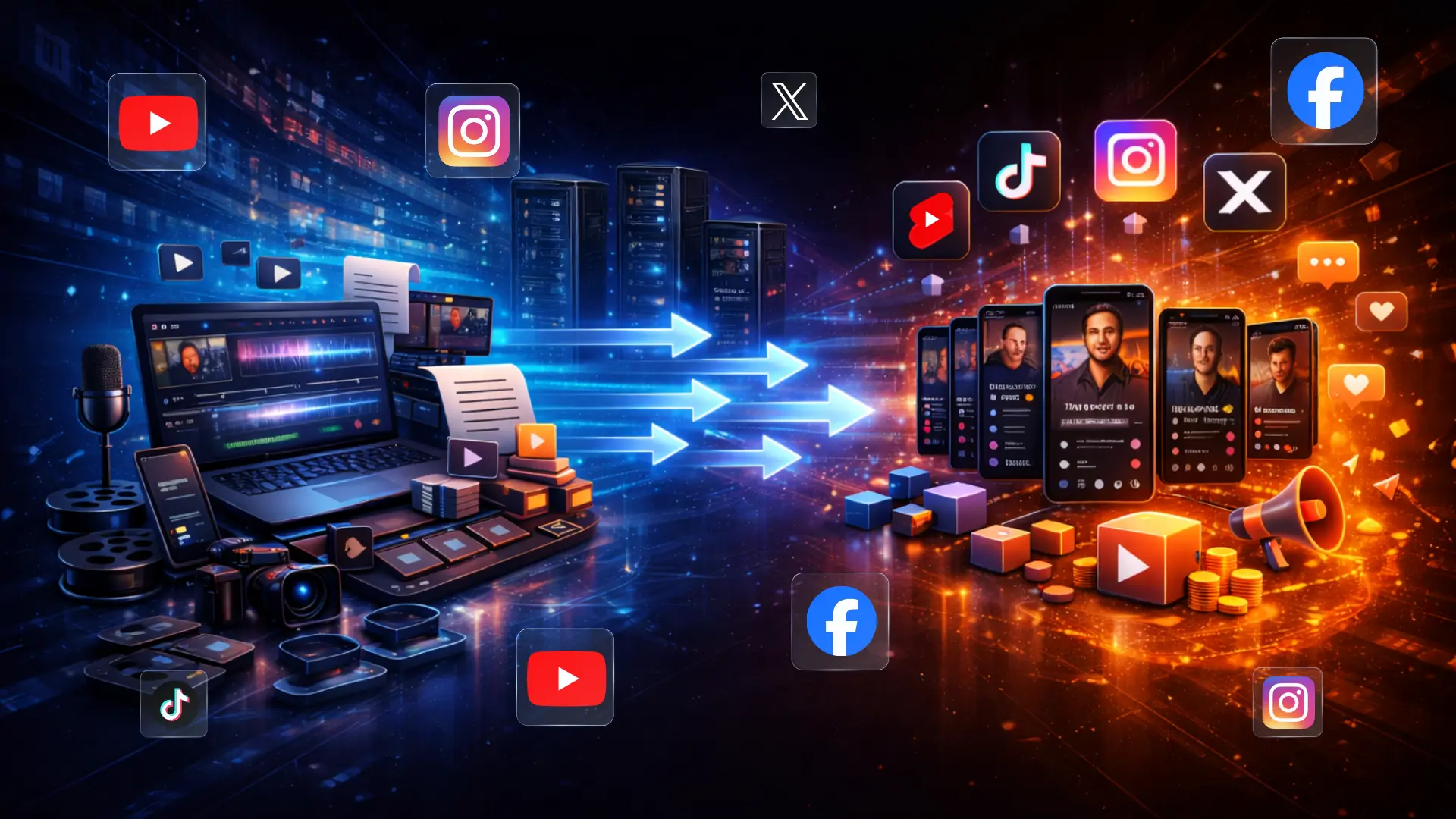
Clipping services help turn long-form content into short-form assets that are easier to distribute, easier to consume, and far more likely to create momentum across modern platforms. Instead of asking one full-length asset to do all the work, clipping creates multiple new opportunities for people to discover the same core message.
If you want a more structured version of that process, these clipping services are designed to help creators, brands, and agencies get more reach from the content they already create.
What are clipping services?
Clipping services are the process of extracting strong moments from long-form content and turning them into short-form video assets for distribution.
That long-form content can include:
- podcasts
- interviews
- webinars
- livestreams
- presentations
- educational videos
- founder content
- coaching sessions
The short-form assets are then used on platforms like TikTok, Instagram Reels, YouTube Shorts, X, and LinkedIn.
At a basic level, clipping services include:
- reviewing source content
- selecting the best moments
- trimming dead space
- tightening pacing
- adding captions
- formatting for vertical viewing
- preparing clips for publishing
The result is not just shorter content. It is more usable content.
Why clipping services matter now
Modern attention is fragmented.
Most people are not looking for a full one-hour episode when they first come across a brand. They are scrolling, scanning, and reacting quickly. A smart clip acts as an entry point. It gives someone a reason to stop, pay attention, and maybe click deeper into the brand.
That is why clipping services matter.
Long-form content builds depth. Short-form content drives discovery.
A full episode or interview might contain ten or fifteen strong moments. If only one version of that content exists, most of those moments never get used. Clipping solves that problem by creating multiple touchpoints from one original asset.
That means:
- more discoverability
- more consistent visibility
- more output from each recording
- more ways for people to find the brand
- more value from the same content investment
For teams that already create long-form content, clipping is often the missing layer.
What good clipping services actually include
Not all clipping work is equal.
Some services just cut random sections and export them. Better clipping services are far more selective and strategic.
1. Strong moment selection
A good clip starts with a good moment.
That might be:
- a strong hook
- a sharp opinion
- a practical takeaway
- a surprising fact
- a memorable quote
- a story that lands quickly
If the moment itself is weak, the clip will not perform well no matter how polished the editing is.
2. Editing for retention
Short-form content needs tighter pacing than long-form content.
That usually means:
- removing filler
- tightening the opening
- sharpening the ending
- keeping the clip focused on one clear idea
The point is not to make everything frantic. The point is to make it easier to watch.
3. Captions and mobile formatting
A lot of short-form content is watched without sound, especially at first.
That is why captions matter so much. Good clipping services usually include readable captions, high-contrast formatting, and layouts built for mobile viewing.
4. Distribution awareness
This is where stronger providers separate themselves from simple editors.
A real clipping service thinks about how clips will be used after they are created. Which ones work better on TikTok? Which fit Reels? Which feel more native on LinkedIn or X?
That kind of thinking turns clips into growth assets instead of just edited files.
Who should use clipping services?
Clipping services are useful for far more than podcasters.
They work well for:
Creators
Creators can stay visible without constantly filming new content.
Brands
Brands can get more mileage from interviews, webinars, and internal media.
Agencies
Agencies can repurpose client content into scalable short-form output.
Founders
Founders can turn conversations into authority-building content.
Coaches and consultants
Experts can use clipped content to stay present and useful across social platforms.
If a business already creates long-form content, clipping services are usually one of the smartest next steps.
The business value of clipping services
The value is not just more clips.
The real value is more leverage.
One podcast episode can become several short-form assets. One webinar can become multiple platform-specific posts. One founder interview can produce a stream of content instead of a single upload.
That changes the return on content production.
Instead of treating each recording as a one-time event, clipping turns it into a reusable source library. That helps brands stay visible longer without multiplying production demands.
Final thoughts
Clipping services matter because they fit how content moves now.
Long-form content builds trust. Short-form content creates reach. The strongest brands use both.
If your team already creates useful long-form content but struggles to distribute it properly, clipping services can help close that gap. They turn one asset into many opportunities. They help strong ideas travel further. And they make content work harder after the original upload goes live.
That is what makes clipping so valuable.
It is not just editing.
It is content leverage.
What's Your Reaction?
 Like
0
Like
0
 Dislike
0
Dislike
0
 Love
0
Love
0
 Funny
0
Funny
0
 Wow
0
Wow
0
 Sad
0
Sad
0
 Angry
0
Angry
0

Admin











Comments (0)